Under the Bonnet: Software
· 13 min read


Part 1 covered the what and the why. This is part two of three - and this one is all hardware. Part three will be the software equivalent: the Dart backend, Docker setup, and Flutter app.
Here we go under the bonnet of the physical stack - the RFID reader, the industrial camera, the network they sit on, and how data moves from the track into the backend.
What happens when you use enterprise hardware and a modern software stack to make a toy smart? We found out.
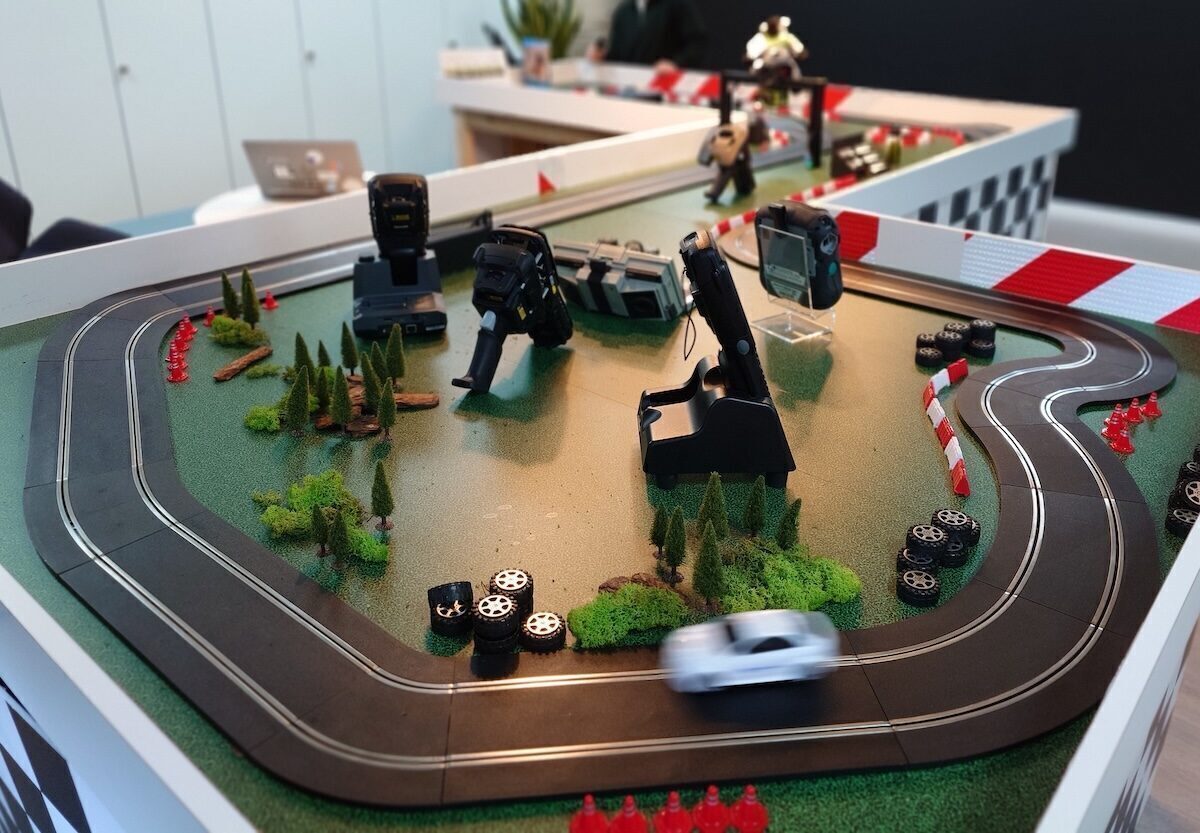
This project started with a simple idea - take a Scalextric track and connect it to some Zebra hardware to show off its capabilities. We went one step further and built a fully deployed experience - one that tracks every lap with millisecond precision, captures a photo as the car crosses the line, and creates a genuinely addictive game. Every technical decision had a player-facing reason. We weren't trying to make it work - we were trying to make it feel like something more.
Fluttercon reaffirmed my belief that Flutter is truly paving the way for the future of multi-platform development.
When I attended Fluttercon Berlin this September, I was blown away by the sheer number of possibilities Flutter offers and the amazing tools showcased by the community.
Attending Fluttercon as a junior developer with only a couple months experience in Flutter felt crazy! I’d never attended anything like this – let alone to this scale. The event, buzzing with seasoned developers, cutting-edge talks, and exciting booths, was both thrilling and intimidating. I couldn’t help but think – was I out of my depth? Would I even understand the discussions?

Test-driven development (TDD) is the process of writing an executable specification for your code. You do this by writing a list of test cases, then going through each and writing the test before writing code to pass that test. After you make each test pass, you should refactor in order to keep your code clean and well integrated. Missing the refactor step can result in fragmented and messy code.
A few years ago, my team faced a challenge - deciding the right framework to use for mobile development going forward. While our team had focused on native Android in the past, the need for cross-platform development was imminent; we had to decide on the path forward.
Ultimately, we decided that a cross-platform framework was needed.
Welcome to the Zeta Design System developer blog.